Beam deflection is a serviceability check: a beam can be strong enough and still sag enough to crack plaster, bounce under foot traffic or pond water on a roof. This post explains when to use L/240 versus L/360, gives the standard beam deflection formulas, shows how deflection is measured, and works a steel beam example in SI and US units. Steel I-beams before fabrication: section depth and moment of inertia I control how much a beam deflects. Photo: W.carter , CC0, via Wikimedia Commons. When to use L 240 vs L 360? Allowable deflection limits come from the governing code and from the finish the beam must protect, so no single ratio always applies. In the IBC deflection criteria of Table 1604.3 (values quoted for illustration; confirm the adopted edition), floor members are limited to L/360 for live load and L/240 for dead plus live load. Roof members under live load are limited to L/360 with a plaster or stucco ceiling, L/240 with a non-plaster ceiling and L/180 with no ceiling. ...
Get link
Facebook
X
Pinterest
Email
Other Apps
Flange Bolt Torque Calculation: ASME PCC-1 Target Bolt Stress, Nut Factor and Worked Example
Get link
Facebook
X
Pinterest
Email
Other Apps
-
Bolt torque turns a wrench reading into the clamp load that keeps a flange joint tight, so the calculation matters as much as the flange class. This post answers six common questions on flange bolt torque calculation, then works an example for an NPS 8 Class 300 joint. All torque values are illustrative; take real values from the project procedure, the gasket maker and ASME PCC-1.
Corroded stud bolts on an outdoor pipe flange: thread condition changes the nut factor and the torque needed. Photo: לקמוס, CC BY-SA 4.0, via Wikimedia Commons.
How to torque flange bolts?
Torque is a proxy for preload: roughly half of the wrench torque is lost to friction under the nut and about 40% to thread friction, leaving around 10% to stretch the stud. So the method is to calculate a target torque, lubricate, and tighten in stages. Typical stages are 30%, 60% and 100% of target torque. Use a star pattern (also called a cross pattern): for an 8 lug pattern, number the studs clockwise and tighten 1-5-3-7-2-6-4-8. Each stage uses the same sequence at a higher fraction of the target torque, followed by a final circular pass. A torque chart or size chart is only valid for the lubricant, friction and target stress it was built for, so check its torque values against your own calculation.
How do I calculate the tightening torque for flange bolts?
Tightening a stud stretches it like a spring. The resulting clamp load must seat the gasket, then stay above the pressure end force plus the gasket's operating load, without yielding the stud or crushing the gasket. ASME PCC-1 guides the choice of target stress for this window. Work from target bolt stress to preload to torque:
Preload: F = Sb × At, where Sb is the target bolt stress and At the tensile stress area.
Torque: T = K × F × D, with nut factor K and nominal stud diameter D. In inch units, T (lbf·ft) = K F D / 12.
Gasket seating: the total preload n × F must exceed Wm2 = π b G y (seating) and Wm1 = 0.785 G2 P + 2 π b G m P (operating).
ASME PCC-1 sets the target stress by flange, gasket and bolt material; 50 ksi (345 MPa) is a common starting point for B7 studs, always within the gasket's maximum stress. K depends on lubricant: about 0.15 for a good moly paste and 0.20 for oil or graphite, up to 0.30 dry (assumed typical values). Torque control gives only about ±30% scatter in preload. Our flange leakage check post shows how bolt load interacts with pipe loads.
What is the correct torque sequence for a 20 bolt flange?
Number the bolts 1 to 20 clockwise and tighten them in cross-pattern groups of four bolts 90° apart, in the style of the PCC-1 sequence tables: 1-11-6-16, then 3-13-8-18, 5-15-10-20, 2-12-7-17 and 4-14-9-19. Repeat the full sequence for each torque round (about 30%, 60% and 100% of target), then make circular passes at 100% until the nuts stop turning. Confirm the order against the PCC-1 table for your bolt count; the principle is to bring the flange faces together evenly.
A click-type torque wrench with a 32 mm socket, the usual tool for controlled flange bolt tightening. Photo: Heron2, CC BY-SA 3.0, via Wikimedia Commons.
What is the required torque for a 4" 150 flange bolt?
There is no universal value: torque depends on stud material, lubricant (nut factor), gasket type and target stress. As an illustration only, an NPS 4 Class 150 flange uses eight 5/8-11 UNC studs (At = 0.226 in²; confirm bolting in B16.5). At 50 ksi, F = 50,000 × 0.226 = 11,300 lbf, and with K = 0.15, T = 0.15 × 11,300 × 0.625 = 1,059 lbf·in = 88 lbf·ft (about 120 N·m). In SI, T = 0.15 × 50,300 N × 0.0159 m = 120 N·m. With K = 0.20 the same preload needs 118 lbf·ft. Check that the gasket can carry the resulting load; a sheet gasket may need a lower stress. The pressure rating of the flange itself is covered in our flange pressure-temperature rating post.
What is the required torque for an 8 inch 300 flange bolt?
The same caution applies. An NPS 8 Class 300 flange normally has twelve 7/8-9 UNC studs (At = 0.462 in²), and the worked example below gives about 253 lbf·ft (343 N·m) per stud for B7 at 50 ksi and K = 0.15, which is illustrative only. A different lubricant, gasket or stud grade changes the answer, so use the joint-specific procedure.
Worked Example: NPS 8 Class 300 Joint
Assumptions: twelve B7 studs, 7/8-9 UNC (At = 0.462 in²), target stress 50 ksi, K = 0.15, spiral-wound gasket with assumed G = 9.5 in, b = 0.3 in, m = 3.0 and y = 10,000 psi, test pressure 1,112 psi (76.7 bar, 1.5 × the 38°C rating).
Step
Calculation
Result
Preload per stud
50,000 × 0.462
23,100 lbf
Torque per stud
0.15 × 23,100 × 0.875 / 12
253 lbf·ft (343 N·m)
Torque if K = 0.20
253 × 0.20 / 0.15
337 lbf·ft
Total preload
12 × 23,100
277,200 lbf
Seating load Wm2
π × 0.3 × 9.5 × 10,000
89,500 lbf
End force H
0.785 × 9.52 × 1,112
78,800 lbf
Operating load Wm1
78,800 + 2π × 0.3 × 9.5 × 3.0 × 1,112
138,500 lbf
Margin
277,200 / 138,500
2.0
Preload exceeds both gasket loads and the pressure end force by a wide margin, so the target stress is acceptable if the gasket can take it. Staged torque rounds of about 76, 152 and 253 lbf·ft (30%, 60%, 100%) would follow, then circular passes. The hydrotest pressure is explained in our hydrostatic test pressure calculation post.
When tightening flange bolts, the correct practice is to?
Tighten in stages, in a star or cross pattern, using a calibrated torque wrench and lubricated threads and nut faces, and finish with circular passes until the nuts stop turning. Never tighten in a simple clockwise order from the first bolt, never exceed the target stress, and keep the flange faces parallel as they close. Re-torque only as the procedure allows, and record the final values.
Practical Checks
Clean and inspect studs, nuts and flange faces; replace damaged or corroded fasteners.
Use new gaskets of the specified type, centred, and never reuse a spiral-wound gasket.
Apply lubricant to threads and nut bearing faces, and use the K value that matches it.
Calibrate the torque wrench, and for critical joints consider hydraulic tensioning to cut preload scatter.
Check the flange gap is uniform and the faces are parallel before final tightening.
Verify stud length: at least one thread should show beyond the nut after tightening.
Confirm target stress and torque with the project procedure, not a generic chart.
How Fluxiss Approaches Flange Bolting
Fluxiss is a multidisciplinary engineering consultancy serving oil and gas, power and maritime clients; its piping team checks bolt loads alongside flange class and stress analysis.
Frequently Asked Questions
Is higher torque always better?
No. Over-tightening can crush the gasket or yield the studs; stay within the target stress.
What is a nut factor?
K is an empirical friction coefficient in T = K F D; it lumps thread and bearing friction.
Should I re-torque after pressure testing?
Only if the procedure requires it; follow PCC-1 and the gasket maker's guidance.
Can I use impact wrenches?
Only for snugging; final tightening should use a calibrated tool.
Do I use the same torque for hydrotest and service?
Yes, unless the procedure specifies otherwise; the bolt load is set at assembly.
Need help with flange joints and pipe stress analysis?
Fluxiss provides piping and stress analysis for process, power and marine piping, including flange selection, bolt load and leakage checks. Send your line list and flange details, and the team can advise on the checks you need.
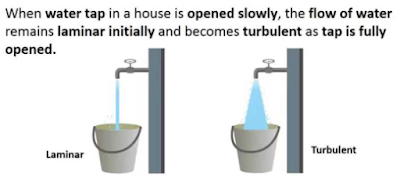
Reynolds Number: Reynolds Number is the ratio of Inertial forces to the Viscous forces. By knowing this number, one can describe the flow whether the flow is laminar, turbulent or transitional flow. There are three possibilities of the range of Reynolds Number: If Reynolds number < 2100 or 2300 ⟺ Laminar Flow If Reynolds number > 4000 ⟺ Turbulent Flow If 2300 < Reynolds number < 4000 ⟺ Transitional Flow In case of different shapes other than circle, the formula for Reynolds Number remain the same however diameter involves in the formula become Hydraulic Diameter which is given by: For pipe: Critical Reynolds Number ⟾ The Reynolds number at which the flow becomes turbulent Re cr For different shapes, the hydraulic diameters are given by: Completely Filled Flow In Closed Channel: If pipe is is considered to filled completely with closed channel, then following are the conditions which...
An atmospheric storage tank shell sees its highest load at the bottom, where the liquid is deepest, so its plate thickness steps down course by course toward the roof. API 650 gives several ways to size those courses, and the one-foot method is the simplest and most widely used for tanks up to 61 m in diameter. This post sets out the equations, then works through a multi-course crude oil tank for both the design and hydrotest cases. It sits alongside our wider guide to pressure vessel and storage tank design . Fundamentals of Tank Shell Thickness Liquid pressure rises linearly with depth, p = ρgh. A thin cylindrical shell resists it with hoop tension, so the required thickness at any level is roughly proportional to pressure times diameter, divided by allowable stress. Each course is a single plate thickness, so it must be strong enough at its lowest point. The one-foot method therefore evaluates each course at a design point 0.3 m (1 ft) above its bottom edge. The offset of 0.3 m ...
Heat exchangers move thermal energy from one fluid to another without letting the fluids mix. They sit in nearly every process, power and utility system, from crude preheat trains to lube oil coolers. Getting one right means getting the thermal duty, the pressure drop and the mechanical design right together. This post covers the fundamentals, the key equations, a worked sizing example and the checks engineers apply before releasing a design. Tube bundle of a shell-and-tube heat exchanger. Photo by Alnitak3/Wikimedia Commons , licensed CC BY-SA 4.0 . Heat Exchanger Fundamentals Heat flows from the hot stream through a wall to the cold stream. Three resistances act in series: convection on the hot side, conduction through the tube or plate wall, and convection on the cold side. Fouling layers add resistance on each surface over time. The designer's job is to provide enough surface area to transfer the required duty with acceptable pressure drop and cost. Type Strengths Limits...




Comments
Post a Comment
Questions or corrections are welcome. Please mention the relevant section and units. Do not post confidential project data or personal contact details. For project inquiries, use the Fluxiss contact page.